Dallas–Fort Worth Pool Leak Guide
Dallas Swimming Pool Leak Detection
How pool water loss is confirmed, structural and plumbing leaks are tested, underground breaks are located, and repairs are planned.

How is a swimming-pool leak found in Dallas?
Start by turning off automatic fill and confirming water loss with a bucket test. A professional can then inspect the equipment and water features, dye-test structural areas, pressure-test individual plumbing lines, and use acoustic equipment to narrow down an underground break before excavation. Dallas-area expansive clay can contribute to movement, but testing—not soil conditions alone—identifies the leak.
Dallas Swimming Pool Leak Detection
Pool leaks are a familiar concern for Dallas homeowners. The original article referenced a 2021 Dallas Business Journal report about the region's large number of pools. More importantly for diagnosis, some soils in Dallas and Fort Worth expand and contract, putting stress on pools and plumbing. Looking for our Maryland information instead? Read four common reasons for pool leaks in Maryland.
“The Dallas area is in the Blackland Prairie, with soils comprised of three primary types (Austin chalk, Ozan Marl and Eagle Ford), often referred to as “cracking clays” due to the large deep cracks caused by dry weather. The unique blend of soil, with a higher clay content, is susceptible to significant expansion that can lead to foundation issues.”
tellafirma.com
Ground movement can stress swimming pools as well as other structures. If your Dallas pool starts losing water, careful testing can help distinguish a plumbing leak from a structural problem.
How to Detect a Pool Leak
Finding a great Dallas-based swimming pool leak detection company is usually going to be the best result. But you can do a few things before you call a leak detection company. If you suspect a leak in your pool, do these things first.
- Turn off your autofill and see how much water your pool is losing
- Do a bucket test
- While the equipment is running, check the backwash drain for a leak
- Check for bubbles coming out of your pool return jets
- Look for running water behind waterfalls
- Check if the leak stops with the water feature off or on
For a more detailed list of what to look for, check out our blog post Four Signs To Look For If Your Pool Is Leaking
Once you’ve confirmed that your pool is losing water, call a professional to pinpoint where the leak is.
Leak Detection for Swimming Pool
A thorough swimming pool leak investigation commonly includes dye testing and plumbing pressure testing. These methods serve different purposes: dye testing helps investigate accessible openings, while pressure testing evaluates isolated plumbing lines.
Pool Pressure Test
A pool leak specialist isolates the plumbing and uses pressure-testing equipment appropriate for that system. A pressure drop can indicate a leak in the isolated line; a stable result must be interpreted alongside the rest of the inspection. Pressure testing is a professional procedure, not a DIY compressed-air test.
If a line does not hold pressure, a technician may use electronic listening equipment to help locate the leak.
The precision of underground leak location depends on the plumbing layout, soil, depth, background noise, and access. The technician should explain the likely repair area and any remaining uncertainty before excavation.
Pool Dye Test
This test is meant mainly for structural leaks. By that, I mean cracks in the pool. You can imagine how this test works.
Using a syringe filled with pool dye, the technician will go to suspicious cracks or places that are most likely to leak in a pool and inject the dye.
If the dye is sucked into the crack, then there is a leak. Simple!
Dye testing takes a gentle touch and a careful eye. Water movement can scatter the dye and make a leak easy to miss. We often use this test to investigate cracks and fittings in Dallas pools affected by shifting soil.
Here’s a more in depth article on doing your own pool dye test:
How To Dye Test For A Swimming Pool Leak
Inground Pool Leak
These techniques are used mainly for inground pools. When an inground pool leaks, often you will not see any evidence of the leak.
That leaky water will seep into the ground and flow wherever it wants. We often get calls from people who have water in their alley or they have a wet spot in their yard. It is scary and easy to assume that the water source is from your pool.
If the pool is not losing water after the automatic filler has been turned off and evaporation has been considered, a wet spot may have another source. Do not assume yard water is coming from the pool without testing.
How Can I Tell Where My Pool Is Leaking
Understanding where your pool is leaking is best left up to the professionals. However, you can do a few things to isolate out different parts of your pool.
For instance, water loss that increases when a waterfall runs can point toward the water-feature system. Read our guide to checking a pool waterfall for leaks for a closer look at the comparison.
If you put your pool in Spa Mode, and your spa loses water but your pool doesn’t, your leak is probably in your spa.
If you have already observed that the water stops dropping near the bottom of a skimmer, tell the technician. That level is a useful clue, but it does not prove the skimmer or its line is leaking. Do not let a pool drain substantially just to find a stopping point.
Repairing Swimming Pool Leaks
First and foremost, do not just start digging around your yard looking for the leak. You might think this is obvious, but we get calls all the time from people who have dug multiple holes in their yard trying to repair their pool leak.
They are playing “chase the wet spot.” This is a bad idea. Water runs throughout your yard, and that leak can come from anywhere. Have a Dallas Swimming Pool Leak Detection Company come and find your leak first. They can, at the very least, advise you on how or if you should repair a pool leak yourself.
How to Repair a Leaking Pool
Different companies offer different services, but most Swimming pool leak detection companies in Dallas and elsewhere offer at least some pool line repair, epoxy repair, and skimmer repair.
Pool Line Repair
This is a very common repair. After a leak is pinpointed underground, the technician will plug all of the lines that flow to that break.
If the break is in the dirt, they will dig down to where they heard the break. If it’s under decking, they may have to jackhammer through the concrete to get to where the break was heard.
As the excavation gets closer to the leak, the technician may adjust the repair area based on what becomes visible.
Once they’ve gotten to the broken pipe, with some type of saw, they cut out the break and re-plumb brand new PVC pipe into the lines. They should re-test the lines to see if their repair was solid. Retesting the lines will also tell them if there is another break in the same lines.
Skimmer Replacement
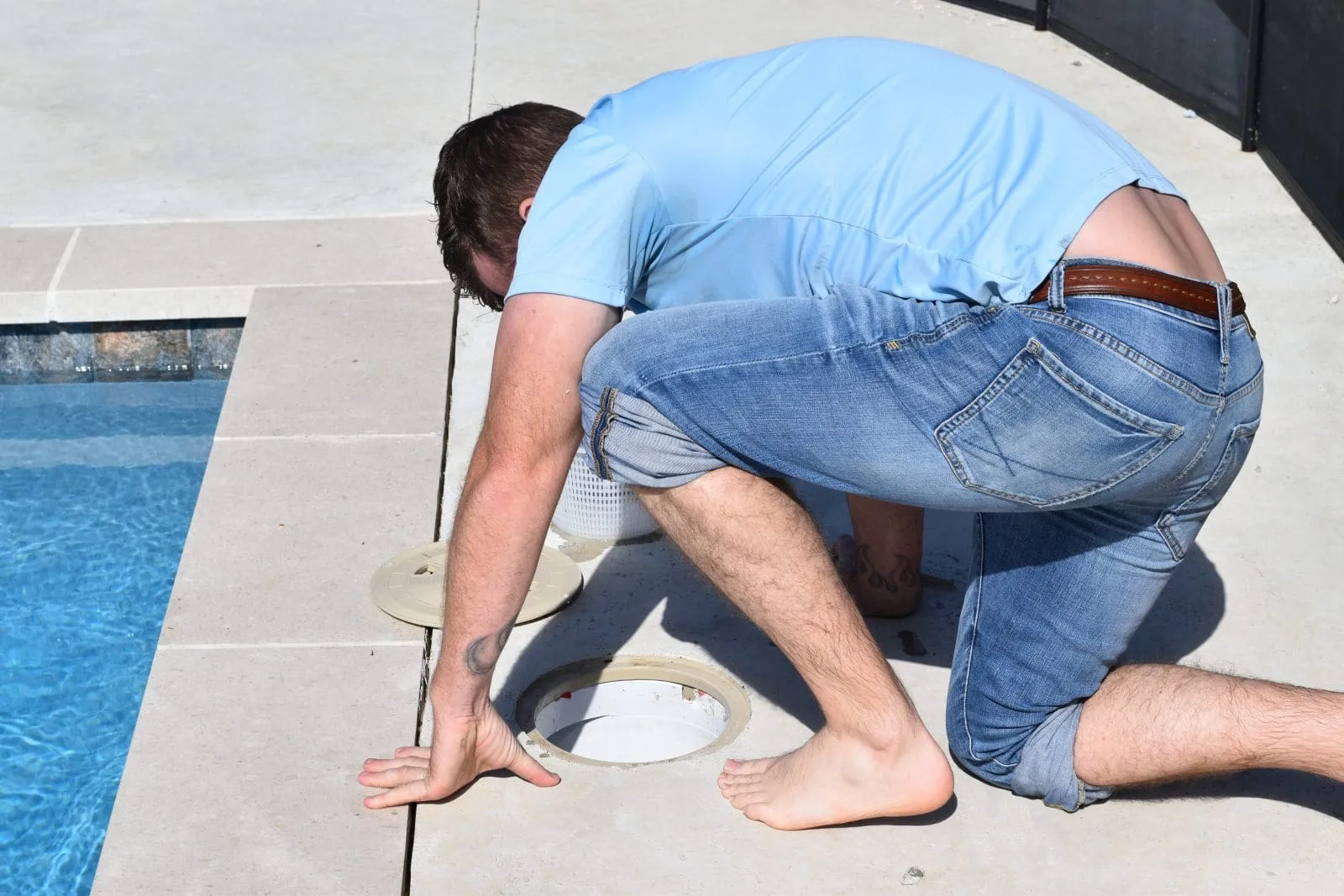
If an entire skimmer needs to be replaced, a technician will need to jackhammer the entire thing out.
When skimmers are installed into a pool, they are laid into concrete which makes this repair very time-consuming and labor-intensive. It is often the most expensive single repair a Dallas swimming pool leak detection company will provide.
A technician will completely clear out the area, cut out the skimmer, and re-plumb it back into the pool lines. Once it’s set, they’ll seal it up and encase it in concrete again. They will then try their hardest to match the concrete as closely as possible to the decking. It usually takes two days for this repair to finish.
Epoxy Repair
When there is a simple crack, an application of AB underwater epoxy is often the easiest and cheapest repair.
These leaks are very often found in skimmer buckets and skimmer throats as well as just fittings, spa spillways, and tile lines.
Epoxy can be a relatively inexpensive repair for a suitable small defect, but it is not a structural repair. Its durability depends on the surface, preparation, temperature, movement, and product used.
Swimming Pool Leak Repair Near Me
It’s always good to have an idea of which swimming pool leak repair and detection companies are near you. Google, Yelp, Angie’s List, and other typical sites are awesome places to start.
As with any service company, check recent reviews and ask about the scope of the inspection. We have heard from pool owners who needed more than one investigation before the source was found. A clear testing plan matters more than choosing on price alone.
Ask for the company's written guarantee and warranty terms. True Blue's warranty policy explains the conditions and exclusions that apply to leak detection and repairs.
Pool Repair Dallas
Dallas pool owners can benefit from understanding how soil movement, plumbing, and pool structures interact. Knowing what to observe before an appointment can help you discuss the next step with confidence.
If you feel ready to call for an expert, go to our online appointment link here or call us at 214-326-2634.
Dallas Pool Leak Detection FAQ
Can Dallas clay soil cause a swimming-pool leak?
Expansive clay can shrink and swell as moisture changes, contributing to movement around pools, decks, and plumbing. It is one possible stressor, not proof of a leak or its location; the pool still requires direct testing.
What is included in professional pool leak testing?
The scope depends on the pool, but it may include water-loss confirmation, equipment inspection, functional isolation, dye testing, pressure testing, acoustic locating, and checks of the shell, fittings, spa, and water features. Confirm inclusions before scheduling.
Is compressed-air pool pressure testing safe to perform yourself?
It can be dangerous. Improper pressure or unsecured plugs can release stored energy and cause injury or equipment damage. Trained technicians should use controlled pressure, suitable gauges, secured test plugs, and procedures appropriate to the plumbing.
Should the yard or pool deck be opened before the leak is located?
No. Surface water and wet soil can travel away from the actual break. Isolate the failing line and acoustically narrow the location before excavation or concrete cutting whenever possible.