Maryland Pool Leak Detection
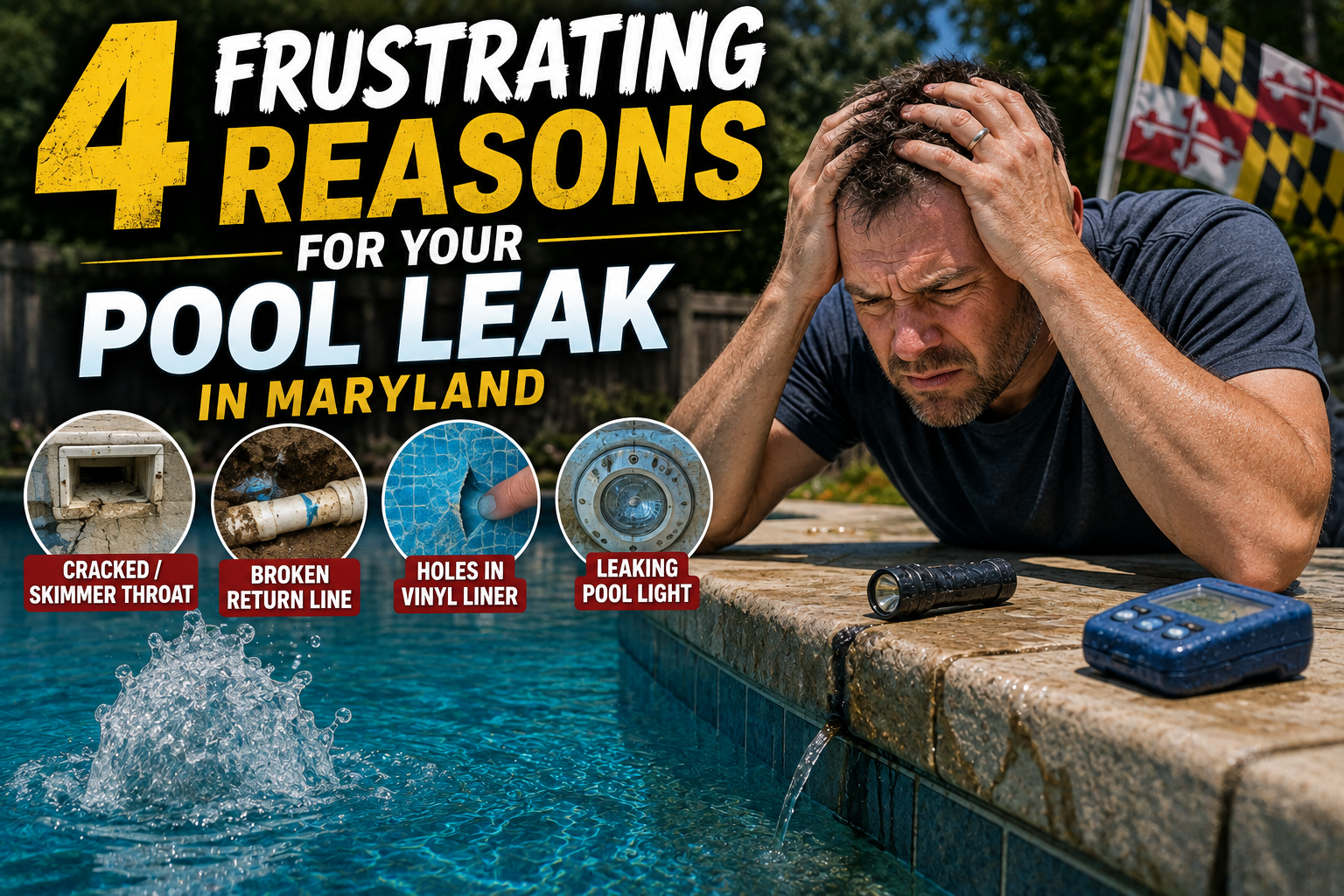
4 Frustrating Reasons for Your Pool Leak in Maryland
Shifting soil, freezing weather, aging materials, and poor construction are four common reasons a Maryland swimming pool begins losing water.
Maryland pool leaks: the short answer
- Shifting or expanding soil can break underground plumbing and pool structures.
- Winter freezes can crack pipes and skimmers, even when a pool was winterized.
- Age, normal wear, liner damage, and poor construction can also cause water loss.
When we visit pools in Maryland—whether in Chevy Chase, Bethesda, Potomac, Baltimore, or Annapolis—many customers are frustrated and confused about why their pool is leaking or why the plumbing has failed. There are a few common reasons this happens.
It helps to understand why pools leak so you can prepare properly and have a clearer idea of what may have caused the problem.
1. Ground Movement and Pool Leaks in Maryland
Expanding and Contracting Soil
One of the biggest reasons pools leak and underground pipes break is the movement of the ground around them.
Depending on where you live, the earth underneath your pool may shift or expand and contract significantly.
A buried pipe can only flex so much before it cracks or separates. Over time, shifting ground and expanding or contracting soil can put enough stress on plumbing and pool structures to cause damage.

Ground movement can affect houses, pool decks, and pool plumbing. A company such as Ram Jack provides foundation-repair information. Visible settling around your pool should be assessed by a qualified professional; it does not establish the cause of a leak by itself.
If your pool deck is sinking or the pool structure appears to be shifting, a foundation or structural specialist may also be worth consulting.
What Kind of Pool Leak in Maryland Can Happen From Shifting Ground?
When the earth moves, we see a couple of types of breaks.
- There are pipe breaks that happen when enough stress is put on your underground plumbing.
- Then there are structural breaks that result in things like cracks in the pool’s shell, separated skimmer throats, leaks in lights, or cracked structural elements.
It is useful to understand these causes because not every leak is the result of poor maintenance or workmanship; natural ground movement can also be responsible.
2. Freezing Weather
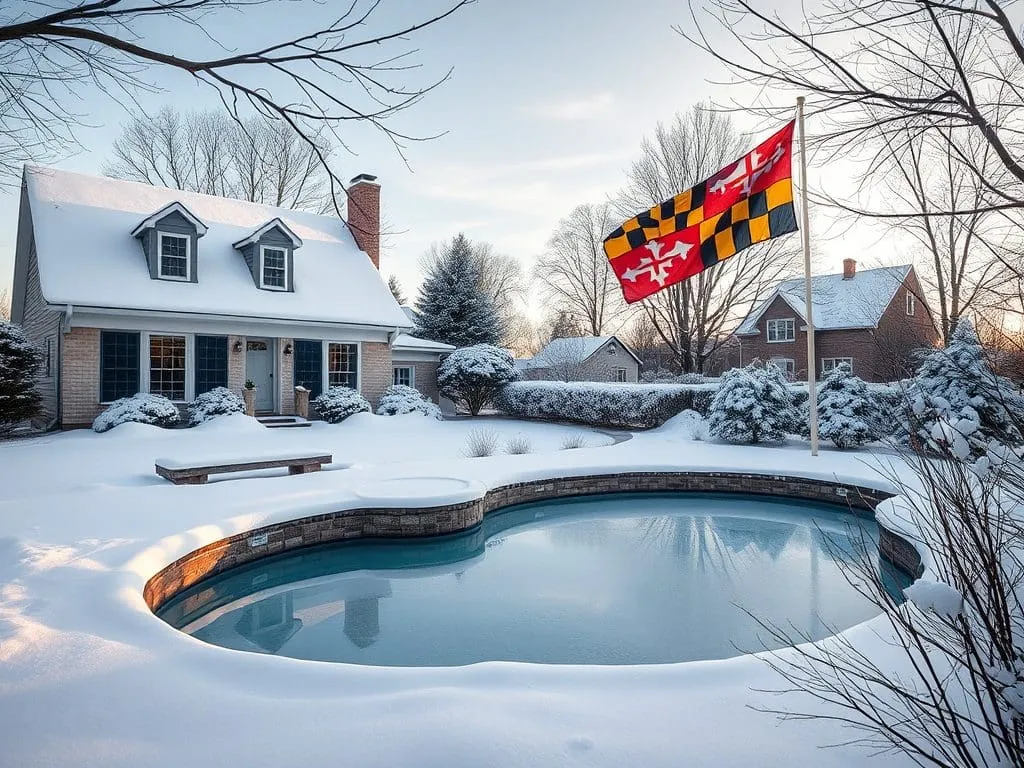
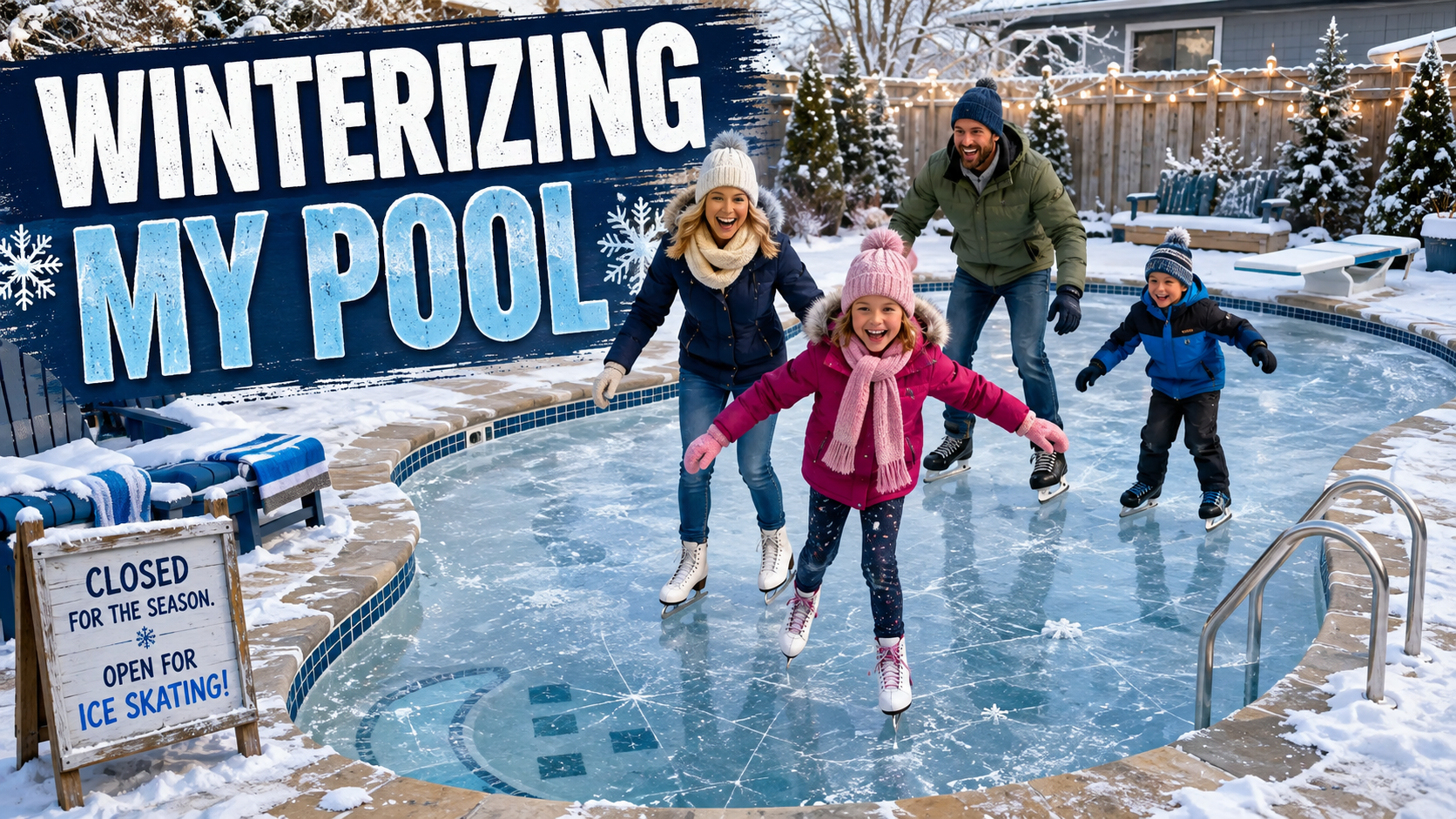
If you’re a pool owner in Maryland, Washington, DC, or Virginia, you likely already know the importance of winterizing your pool.
Even after winterization, water can sometimes enter a pipe or remain trapped in a skimmer during a hard freeze. When that water freezes and expands, it can crack plumbing or skimmer components.
That is why proper winterization is so important, especially throughout the DMV region.
If you’re a DIYer, follow our short article here on winterizing your pool!
3. Time, Wear, and Tear
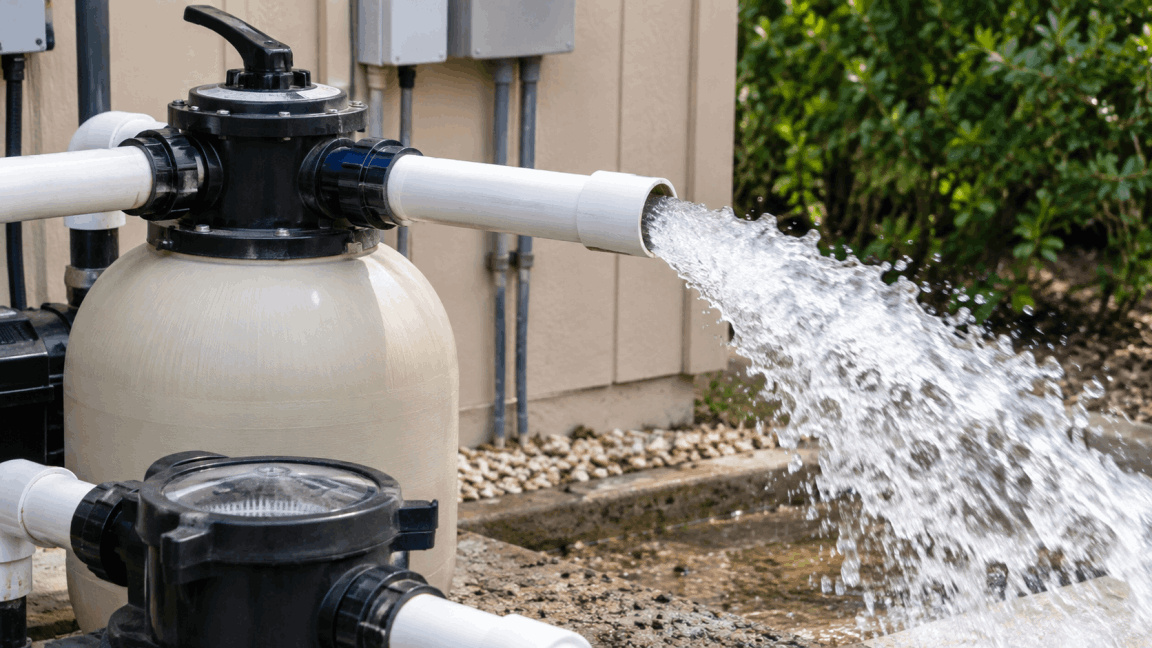
Time takes its toll on everything. Wear-related leaks can include a faulty backwash valve or a torn vinyl liner. If your Maryland pool appears to lose water only while the system is running, a leaking backwash valve is one possibility worth checking.
This is often straightforward to check. Here is our guide to diagnosing a possible backwash leak:
How to check my pool backwash for a leak
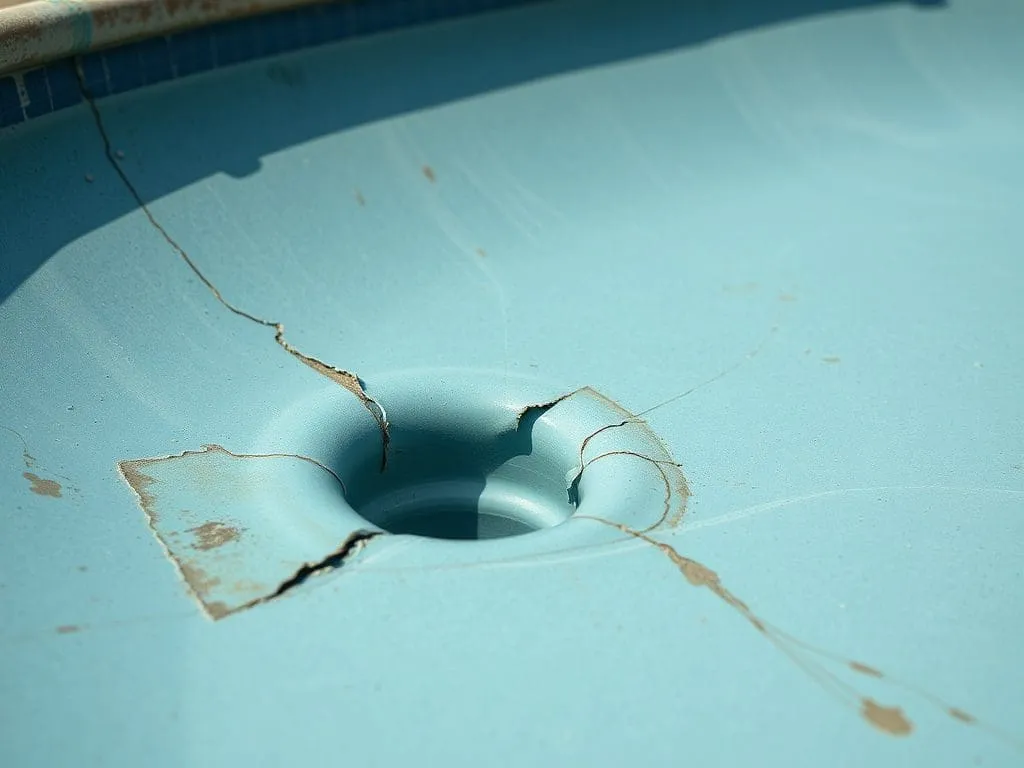
Vinyl liners can develop holes or tears, while fiberglass shells can develop cracks or problems around fittings. These are different pool surfaces and require different inspection and repair methods.
We have inspected pools with liners less than a year old that already had tears.
Even if you have a new liner, you shouldn’t rule out the possibility of a liner leak.
These defects can be easier to spot on a solid-color liner, while dense patterns can make small tears much harder to find.
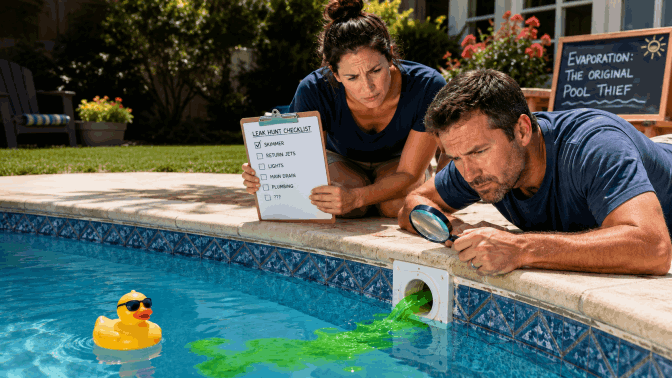
Inspect accessible areas from the poolside and use pool leak-detection dye only where you can work safely. Keep away from suction fittings and drains, do not swim alone, and leave deep-water or underwater inspection to a qualified professional.
When in doubt, give us a call. We use specialized equipment that can help pinpoint leaks in vinyl and fiberglass pools.
4. Construction Problems
Less commonly, a Maryland pool leak may be related to poor construction or overlooked workmanship.
Sometimes we excavate what appears to be a broken underground line only to discover that the pipe itself was not cracked—it was improperly assembled.
In some cases, a fitting was never properly glued.
On another repair, we found a pipe that had been sealed with duct tape instead of a proper PVC fitting and solvent weld. Over time, the tape deteriorated and allowed water to escape.
We could tell plenty of stories like that—but those are for another blog post.
Pool Leak in Maryland Conclusion
There are many reasons a pool can start leaking, and leaks become more likely as a pool and its plumbing age.
Common causes include ground movement, freezing weather, normal wear and tear, and poor construction practices.
If you suspect a pool leak in Maryland, give us a call and we can help you troubleshoot the problem over the phone.
Maryland Pool Leak Questions
What commonly causes pool leaks in Maryland?
Common causes include shifting or expanding soil, freezing winter weather, ordinary wear and tear, and poor construction practices.
Can freezing weather damage a properly winterized pool?
Yes. Water may still enter a winterized pipe during a freeze, or water inside a skimmer can freeze, expand, and crack the skimmer.
Can a new vinyl pool liner still leak?
Yes. The article notes that even liners less than a year old can tear, so a newer liner should not automatically be ruled out.
What can cause a pool to leak only when the pump is running?
A faulty backwash valve is one possible cause when a Maryland pool appears to lose water only while the system is running.