Seasonal Pool Care
Winterizing My Pool
A practical nine-step guide to cleaning, balancing, draining, protecting, and covering a swimming pool before freezing weather arrives.
How to winterize a pool: the short answer
- Remove accessories, deep clean the pool, balance the water, shock it, and add winterizing chemicals.
- Lower the water, drain equipment, clear the plumbing lines, and install a secure winter cover.
- Blowing out plumbing is advanced; the article recommends calling a professional if you are not comfortable doing it.
Winter is coming, and that means it’s time to winterize your pool! But you may be asking, “Isn’t winterizing my pool hard?” That depends on the equipment you have, the location of your pool, and how handy you are. If you need to winterize your pool, knowing how to do it yourself can save you hundreds of dollars a year.
Properly closing your pool protects it from cold-weather damage, prevents costly repairs, and makes reopening in the spring much easier. At True Blue Leak Detection, we’re here to help guide you through the process. Follow this simple, step-by-step guide to ensure your pool is ready to weather the off-season.
Why Is Winterizing My Pool Important?
Winterizing prevents freeze damage to your pool equipment and plumbing, keeps your water clean, and protects your pool’s surfaces from algae, stains, and scaling. Skipping this essential step can lead to expensive repairs when you reopen in the spring.

Step-by-Step Guide to Winterizing My Pool
Step 1: Remove Pool Accessories
Start by removing skimmer baskets, ladders, the diving board, pool toys, and solar blankets. Clean and dry them, then store them in a safe, dry place for the winter.
Some ladders are permanent, but many can come out if you unscrew the bolts holding them in.
Here’s a simple video showing you how to take out your ladder:
Step 2: Deep Clean Your Pool
Get rid of leaves, dirt, and debris using a skimmer net and vacuum. Brush the walls and floor to prevent algae and staining during the colder months.
If you’ve been staying on top of your pool maintenance all summer, this shouldn’t take you too long.
However, if you’ve let leaves and debris from the trees sit in your pool for a while, this process can take several hours.
Step 3: Test and Balance Water Chemistry
Balanced water chemistry helps protect your pool. The values below are general starting points from the original guide, not universal specifications. Follow the limits for your pool surface, equipment, sanitizer, and winterizing products, and ask your pool professional to interpret the full water balance:
- pH: 7.2–7.6
- Total Alkalinity: 80–150 ppm
- Calcium Hardness: 175–275 ppm
Add the necessary chemicals to achieve the correct balance and prevent scaling and corrosion.
If you don’t know how to do this, take a sample of your pool water to a pool supply store like Leslie’s. They can put together a plan to help you balance your chemicals for free. The plan is free—the chemicals aren’t, lol.
Step 4: Shock Your Pool
Use a pool shock treatment only according to the product label and your pool professional's closing plan. The required circulation time and the interval before adding other products vary; do not mix concentrated chemicals or use a fixed four-hour rule for every product.
Step 5: Add Winterizing Chemicals
Introduce an algaecide to keep algae at bay and consider adding stain and scale preventers to protect your pool surfaces.
There are many types you can add. Some chemicals go in once at closing, while others remain in your pool and slowly release chemicals throughout the winter.
Step 6: Lower the Water Level
Follow your pool and cover manufacturer's winter water-level instructions. The correct level varies by pool construction, cover, and winterization method. Do not assume every pool should be drained below the skimmer, and do not empty the pool without professional guidance.
Step 7: Drain Pool Equipment
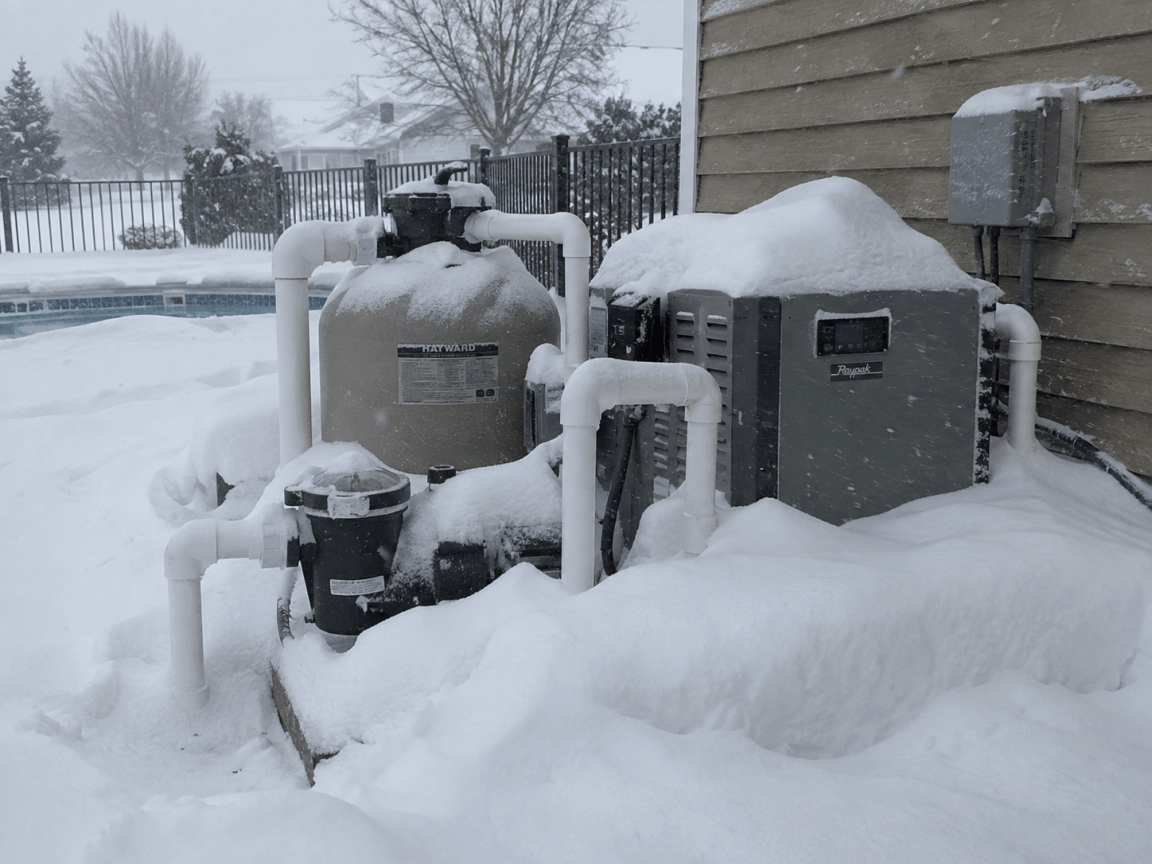
Turn off and unplug your pump, heater, and filter. Drain all water from the equipment and store removable components indoors if possible.
For more details on winterizing some of your equipment, check out our article. Note: It does not cover blowing out the lines or winterizing the heater.
How to winterize my pool equipment
Step 8: Blow Out the Water Lines
This step is more advanced and may require equipment you don’t have. If you are not comfortable with it, call a professional. Warning: If you don’t properly blow the water out of your plumbing, your pipes may freeze, causing a very expensive repair. Your equipment, including the heater, also needs to be properly protected from freezing.
Have the plumbing cleared and protected using the equipment manufacturer's procedure. Pool-rated antifreeze may be appropriate in some systems, but it is not a substitute for correct winterization; never use automotive antifreeze.
Here’s a great video on that process:
Step 9: Cover Your Pool
Install a durable pool cover to keep out debris and sunlight. A tight, secure cover also protects your pool from harsh winter weather.
FAQs About Winterizing My Pool
What happens if I don’t winterize my pool?
Your pool could sustain freeze damage, algae growth, and equipment failures, leading to costly repairs in the spring.
Can I winterize my pool myself?
Yes, many pool owners choose to DIY the process. However, if you’re unsure or want peace of mind, hiring a professional is a great option.
Do I need to balance my pool’s chemicals before winterizing my pool?
Yes, balancing your water chemistry prevents scaling, staining, and algae growth during the winter.
How often should I check my pool cover during winter?
Check your cover monthly to ensure it’s secure and free of debris.
FAQs About True Blue Leak Detection
What services does True Blue Leak Detection offer?
We specialize in finding and fixing pool leaks. Our expert team uses advanced technology to locate leaks quickly and accurately, saving you time and money.
Can True Blue Leak Detection help with winterizing my pool?
While we focus on leak detection, we’re happy to guide you through the winterization steps or connect you with trusted professionals for the job.
Why choose True Blue Leak Detection?
We’re a locally owned, trusted business dedicated to keeping your pool in top shape. Our experienced team is reliable, thorough, and passionate about pool care.
Winterizing your pool doesn’t have to be overwhelming. By following these steps and staying proactive, you can protect your pool all season long. If you have any concerns or need help with pool maintenance or leak detection, reach out to True Blue Leak Detection. We’re here to make pool ownership easy and stress-free!