Pool Water-Loss Troubleshooting
Losing Water in Your Pool?
Before assuming the worst, compare evaporation with true water loss and inspect several common circulation and overflow causes.
What should you check when a pool is losing water?
First compare the pool against evaporation with a bucket test and turn off any automatic filler. If the loss is greater than evaporation, note whether it occurs with the equipment running, inspect the backwash discharge and water features, and make sure the pool is not draining through an overflow or an unsealed area above the normal operating level.
Don’t Freak Out… Yet.
You’ve noticed that your pool is losing more water than usual. This can be because of several things, so don’t freak out quite yet.
If your pool is losing water, here are some things to check before calling a leak detection specialist (us!):
Evaporation
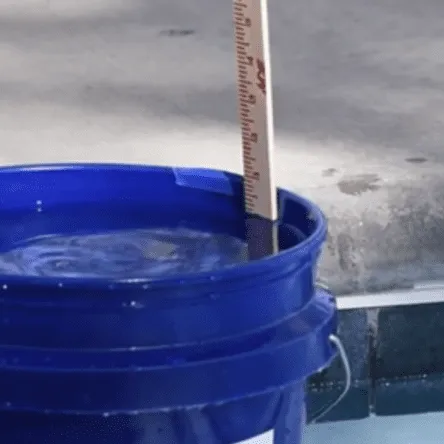
Due to the water cycle, pools lose water every day—it’s natural. Evaporation varies from city to city and, quite possibly, from house to house. There are two ways that we recommend testing water loss to determine if it is from evaporation.
- One useful resource is Anderson Manufacturing Company. They sell leak detection equipment, but on their website, you’ll find a link where you can put in your zip code, and it will estimate the evaporation level you can expect in your area. Check it out: https://www.leaktools.com/evaporation-estimator.html
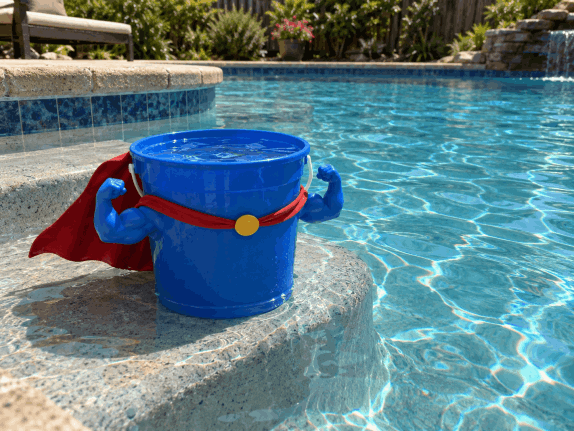
- The pool bucket test, which you’ll see us repeatedly discussing in many of our blogs, is a straightforward way for pool owners to test the environmental evaporation level versus the water loss in the pool. www.trueblueleakdetection.com/the-pool-bucket-test
When you call our office, we will ask whether you have completed either of these tests and request that at least one be done before a technician is sent to your location.
Pool water loss due to a leak
Once you’ve found that your pool is losing more water than can be attributed to evaporation, you will next need to find out when it is leaking.
- Does your pool leak when the equipment is running?
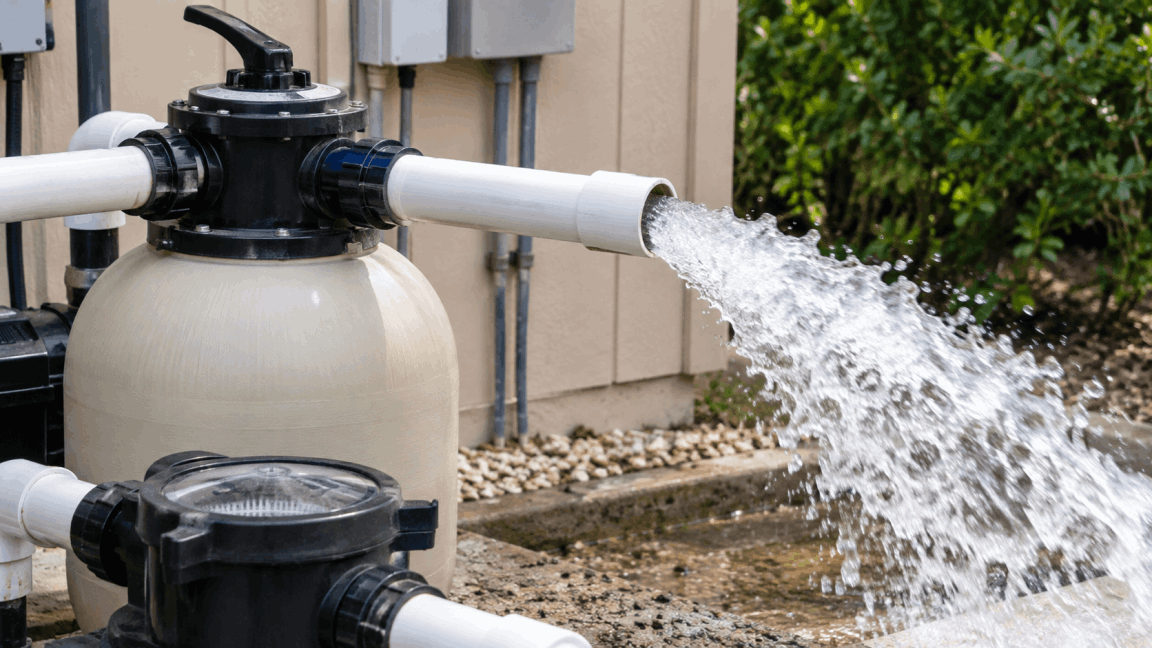
- Check your backwash for a leak:
- Here is a simple video that shows how to check for a leaking backwash valve:
- Check Water Features
- If the backwash valve isn’t leaking, please take a moment to check your water features. Here is a great article about checking water features:
Three Easy Ways to Check For a Pool Waterfall Leak
- Does your pool leak when the equipment is on and when it is off?
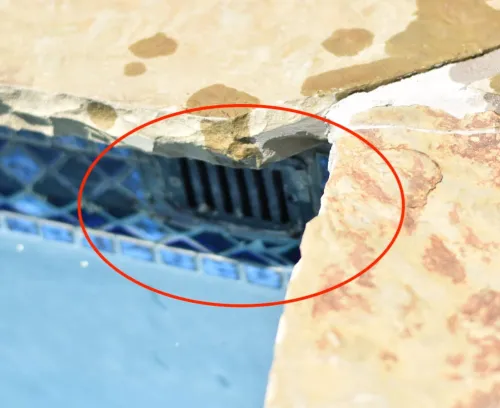
- Overfilling Pool – It pains us to charge homeowners for a full leak detection when the answer may simply be to stop filling the pool past the overflow grate.
- Think of it just like the overflow on a bathtub.
- “Where is the overflow grate?” you ask. Here’s a picture of one:
- Filling the pool up to the coping stones
- Some pools don’t have overflow grates, so many owners think they should fill the pool up to the very top.
- This often leads to a lot of water loss.
- That water loss comes from the top of the skimmer box or mortar that isn’t sealed up properly anymore.
I know this part may seem silly, but trust us… we see people overfilling their pools more often than we like to admit.
Still losing water in your pool?
After checking all these things, if you’re still experiencing pool water loss, it’s time to call a leak detection specialist.
Pool Water-Loss FAQ
How much daily pool water loss is normal?
There is no single normal amount because wind, heat, humidity, sun exposure, water temperature, and pool activity all matter. A bucket test compares the pool with water exposed to the same conditions and is more reliable than a universal inches-per-day rule.
Should an automatic pool filler be turned off during testing?
Yes. An automatic filler can replace lost water and conceal the rate of loss. Turn it off, mark the water level, and record any rain or manual additions during the test period.
What does water loss only while the pump runs suggest?
It can point toward pressure-side plumbing, equipment, water features, or unintended discharge through a backwash line. It is a diagnostic clue rather than proof of one specific failure.
When is it time to call a pool leak specialist?
Call when measured loss exceeds evaporation, basic overflow and equipment checks do not explain it, the water approaches a fitting or light, or continued refilling risks damage or unusually high water bills.