Nashville Pool Leak Guide
Why Is My Pool Leaking? 10 Common Causes in Nashville, Tennessee
A practical guide to the places pools commonly lose water—and the Middle Tennessee conditions that can make the problem harder to recognize.

What are the most common reasons a pool leaks?
Most swimming pool leaks come from a damaged liner or pool shell, loose or deteriorated fittings, a light niche or conduit, underground plumbing, leaking equipment, a faulty backwash line, or an attached spa or water feature. In Nashville and Middle Tennessee, hard freezes and shifting soil around limestone and clay-rich ground can also place extra stress on plumbing and structural joints.
When a pool starts losing water, most owners want the answer to one simple question: Where is it going? Unfortunately, water can escape from several parts of a swimming pool, and the leak is not always located beside the first wet spot you notice.
Some leaks are visible—a dripping pump seal or a torn vinyl liner, for example. Others disappear beneath a concrete deck, travel through soil, or drain unnoticed through a backwash line. An automatic water-leveler can make the problem even harder to see because it quietly replaces the missing water.
First, make sure it is a leak—not evaporation
Nashville summers can be hot, sunny, and breezy, so every outdoor pool loses some water naturally. Swimmers, pets, fountains, waterfalls, and repeated filter cleaning can remove additional water without an actual defect in the pool.
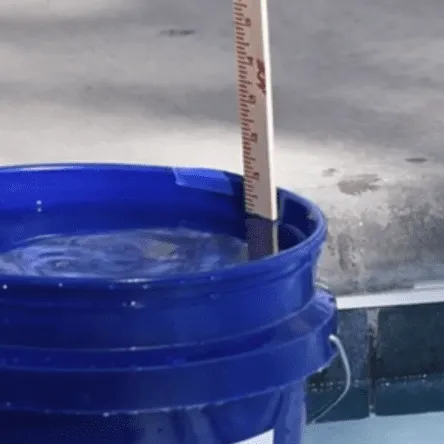
The easiest comparison is a 24-hour pool bucket test. The water inside the bucket experiences nearly the same weather as the pool but is isolated from the pool system. If the pool drops farther than the bucket, there is likely another source of water loss.
Turn off the autofill during the test, avoid adding water, and mark both starting levels carefully. If rain is expected, wait for a more stable day or restart the test afterward.
10 common reasons your pool may be leaking
1. A hole or separation in a vinyl liner
Vinyl liners can develop small punctures, worn areas, tears near steps, or separations around faceplates. Even a tiny hole can release a surprising amount of water over time. The most vulnerable areas are often corners, seams, ladders, steps, drains, and places where the liner has become brittle.
If the water level stops dropping at a particular height, inspect the liner and fittings near that level. Do not deliberately let a vinyl pool drain too far; low water can allow the liner to shrink, wrinkle, or pull away from the walls.
2. A crack in a concrete, gunite, or fiberglass pool
Not every visible crack leaks. Some are only surface cracks in plaster or gelcoat. A crack becomes suspicious when dye is pulled into it, the surrounding material has shifted, or the water consistently settles near the same elevation.
Common structural leak locations include the tile line, steps, transitions, penetrations, and joints between materials. Repairing the surface without confirming the actual path of the water can hide the symptom while leaving the leak active underneath.
3. Worn gaskets or gaps around pool fittings
Skimmers, return fittings, main drains, suction ports, and wall penetrations all create joints in the pool structure. Gaskets can deteriorate, screws can loosen, sealant can fail, and the material around a fitting can crack.
A careful dye test can sometimes confirm a fitting leak when the water is still. Test slowly and avoid creating currents with your hands, because moving water can make dye appear to enter a fitting even when it does not.
4. The pool light niche or electrical conduit
The pool light is a common hiding place for structural leaks. Water may escape around the niche, through a failed seal, or into the conduit that carries the light cord back toward the junction box. The visible light fixture itself is not always the damaged component.
Because electricity and water are involved, switch off the appropriate breaker and use a qualified professional when the inspection goes beyond a simple visual check.
5. A broken or separated underground pipe
Pool plumbing can leak from cracked pipe, failed glue joints, damaged valves, settling backfill, or stress near equipment and fittings. Pressure-side leaks often become more noticeable while the pump is running. Suction-side problems may behave differently and can draw air into the system rather than producing an obvious puddle.
A pump-on versus pump-off test can provide a clue, but it is not a final diagnosis. Professional pressure testing isolates individual lines so the failed section can be identified before anyone cuts a deck or digs.
6. Pump, filter, heater, or valve leaks
Begin every leak inspection at the equipment pad. Look beneath the pump, around the filter tank, at heater connections, and along every visible union and valve. Dried mineral deposits, rust trails, damp concrete, or recurring puddles may reveal a slow leak.
Equipment leaks can be intermittent. A pump shaft seal may drip only while running, a filter may leak only at higher pressure, and a heater bypass may change the path of the water.
7. A backwash or waste line that never fully closes
A worn multiport valve or damaged diverter gasket can send pool water down the backwash line even when the valve appears to be set to Filter. If the waste line connects directly to a drain or exits far from the equipment pad, the loss may remain completely invisible.
Inspect the end of the waste line while the pump is running. If the line is buried or permanently connected, use the steps in our guide to checking a pool backwash line for leakage.
8. An attached spa, waterfall, or raised feature
Spillover spas, fountains, waterfalls, and raised walls add plumbing, joints, check valves, and surfaces above the normal pool level. Water may leak only while a feature is operating, or a failed check valve may allow a raised spa to drain back into the pool after the pump shuts off.
Compare water loss with each feature isolated. If a spa appears to lose water but the pool rises, the water may be transferring between vessels rather than leaving the system.
9. Freeze damage to exposed or shallow plumbing
Middle Tennessee winters are usually milder than those farther north, but Nashville still experiences hard freezes and occasional prolonged Arctic cold. The National Weather Service documented extended dangerous cold across Middle Tennessee in January 2024. Pools that are not circulating, drained, protected, or properly winterized can suffer cracked equipment, split valves, and damaged plumbing during these events.
After a severe freeze, inspect the equipment pad before restarting the system. Small cracks may not become obvious until the pump pressurizes the equipment.
10. Ground movement or settling around the pool
Middle Tennessee has a complicated combination of soluble limestone, karst features, and clay-rich layers. The U.S. Geological Survey reports that carbonate rock underlies most of Middle Tennessee. That geology does not automatically cause a pool leak, but shifting backfill, drainage changes, and settlement can stress plumbing joints, decks, and structural transitions.
It can also make leak evidence misleading. Water escaping below ground may travel along pipe trenches, cracks, or natural openings instead of surfacing beside the leak. A dry yard does not prove that buried pool plumbing is watertight.
How Nashville and Tennessee conditions complicate pool leaks
Local weather and geology usually do not identify the leak by themselves, but they can change what a homeowner sees:
- Hot summer weather increases evaporation. That makes a bucket test more reliable than guessing from a waterline mark.
- Heavy rain can temporarily hide water loss. A pool may appear stable for several days because rain replaced the leaking water.
- Sudden freezes can damage unprotected components. Nashville does not need an entire winter below freezing for trapped water to expand inside a valve, filter, or pipe.
- Limestone and clay-rich ground can redirect leaking water. The visible wet area—if one appears at all—may be some distance from the failed component.
- Long swimming seasons mean more operating hours. Pumps, valves, water features, and automatic fillers may run for much of the year, revealing wear that seasonal pools experience less often.
These are reasons to test the pool system methodically, not reasons to assume the worst. Most pool leaks can be narrowed down without tearing up the entire deck.
What you can check before calling a leak-detection company
- Turn off the autofill. Confirm that fresh water is not masking the loss.
- Run a bucket test. Compare pool loss with evaporation over the same period.
- Record the water level. Note whether it stops near a skimmer, return, light, step, or other fitting.
- Inspect the equipment pad. Check both while the pump is running and after it shuts off.
- Check the waste line. Make sure water is not escaping through backwash plumbing.
- Compare pump-on and pump-off loss. Treat the result as a clue, not proof of a particular failed line.
- Use dye only where you have a real suspect. Keep the water still and place dye close to the surface being tested.
Write down your results and take photographs. Good observations can shorten the professional diagnosis and reduce unnecessary digging.
When professional leak detection makes sense
Call a professional when the pool consistently loses more water than the bucket, the leak appears to be underground, the water is approaching an unsafe level, or several possible sources need to be isolated. A proper inspection may include pressure testing, acoustic listening, hydrophone testing, dye testing, equipment isolation, and a detailed structural examination.
The goal is not merely to confirm that the pool leaks. It is to identify the smallest practical repair area so the right contractor can fix the actual problem.
True Blue Leak Detection - Nashville serves pool owners throughout Nashville and Middle Tennessee. If you have completed the basic checks and still cannot explain the loss, we can test the pool and show you where the water is escaping.
Local information sources
The Tennessee-specific context in this article is based on information from the U.S. Geological Survey’s Tennessee karst study, its report on karst aquifers in Tennessee, and the National Weather Service’s Middle Tennessee climate records.
Nashville Pool Leak FAQ
How much water loss is normal for a Nashville pool?
There is no single daily number that fits every pool because temperature, wind, shade, humidity, water temperature, and features all affect evaporation. A bucket test compares your pool with its actual conditions and is more dependable than a generic estimate.
Can a pool leak without creating a wet spot?
Yes. Water from an underground leak may travel through backfill, pipe trenches, cracks, or natural openings in the ground. Waste-line leaks can also discharge into a drain where the water is never visible.
Why does my pool lose more water when the pump is running?
Greater loss with the pump running can point toward a pressure-side pipe, equipment, filter, heater, or waste-line problem. It is only a diagnostic clue; isolating and pressure-testing the lines is the reliable way to confirm the source.
Can a Nashville freeze cause a pool leak?
Yes. Water trapped inside exposed equipment, valves, fittings, or shallow plumbing can expand during a hard freeze and crack the component. The damage may not become visible until the system is restarted and pressurized.
Should I keep adding water to a leaking pool?
Maintain enough water to protect the pump and, for vinyl pools, to help keep the liner in place. However, continuous refilling wastes water and can worsen erosion beneath the deck or pool. Arrange diagnosis promptly rather than allowing the pool to drain unchecked.