Pool Leak Warning Signs
Top 4 Signs of a Pool Leak in your yard
Wet ground, unexplained runoff, a high water bill, and measured water loss can help determine whether the pool needs testing.

What are four common signs that a pool may be leaking?
Possible signs include a persistently wet area in the yard, unexplained water running toward an alley or drain, a sudden water-bill increase when automatic fill is operating, and pool water dropping faster than a bucket exposed to the same weather. The first three are clues; measured water loss beyond evaporation is the strongest confirmation.
Top 4 Signs of a Pool Leak in your yard
Okay, so at this point, you are probably seeing some things happening to your pool or backyard that you’re not used to seeing. You have a thought that it might be your pool causing the issue, but you’re not sure. Or maybe your pool maintenance person has told you they think you have a leak and should contact a leak detection company.
However, you‘re not ready to call a company yet because you want to know for certain whether you have a pool leak or not. Smart!
So, here are some of the main things to look for when you have a pool leak and how to test for it. The last thing on this list will definitively tell you if you have a pool leak, so read all of the way to the end.
So here are the Top 4 Signs of a Pool Leak in your yard:
1. Wet Spot in your Yard

The first of four signs of a pool leak in your yard is a wet spot! Many of us have heard that if there is a wet spot in the yard, it is probably from a pool leak. This is the case often enough. However, it isn’t always true, AND pools can leak without showing any outward signs at all.
So, check if your irrigation system might be causing the wet spot. We have seen wet spots travel over from neighbor’s yards as well, so a wet spot might not always be from the pool, but it’s a good indicator.
If you suspect it may be from another source than your pool, this may be a good website to check where the leak may be coming from:
2. Water Running in your Alley-way
This is another very common thing we see in pool leaks. Again, most pool leaks don’t show signs like this, but it happens often enough that if you see it, it would be wise to suspect your pool.
Same with the first sign, this can also be from irrigation, not only from your yard but also from a neighbor’s yard. There are a couple of good things to check.
– If you can get a good enough sample, test the water leaking with a pool chemical test kit. If the water leaking out into your alley has chlorine or other chemicals in it that your pool has, you can assume it’s from your pool.
– Check the backwash while your pool is running. You might be leaking from your backwash, and that water often goes through a french drain to your alleyway. (This is good to check no matter what if you suspect a leak)
3. Super High Water Bill
This is very common! We hear from people who, one month, all of a sudden, have a $500 water bill or more! This is a good indicator of a pool leak.
This type of thing mainly happens if your pool has an autofill. If your pool has an autofill, turn it off and see if it is losing water. If the pool doesn’t lose any water when you turn the autofill off, then that water spike is likely due to another leak on your property or in your house.
And Most Importantly…
4. Your Pool is Losing Water
Here’s one of the most important things you should understand as a pool owner. If the pool is not losing water, your pool does not have a leak.
This may seem obvious, but sometimes it’s easy to blame the pool when wet spots appear.
There are two simple ways to see if this is the case.
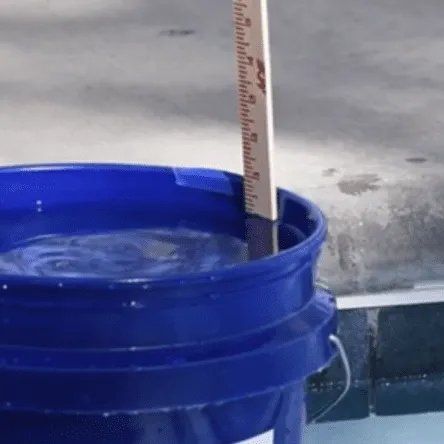
The most effective way to know for certain if your pool is losing water from a leak is to do a bucket test!
Click on the link above to go to our page, which shows you exactly how to do the bucket test. It’s super easy and super cheap, and you’ll have peace of mind knowing whether or not your pool is leaking.
If you don’t want to do a bucket test or don’t have the right equipment to do one, put a piece of tape where the water level is and go back to the pool 24 hours later with a ruler and measure how far the water has dropped.
Depending on the weather, you can expect to lose 1/8-1/4 in evaporation. So anything over that you could very likely consider a leak. These are the Top 4 Signs of a Pool Leak in your yard!
So…
Follow these steps so you can be sure whether you have a leak or not, and if you do, call a leak detection specialist.
If you feel ready to call for an expert, go to our online appointment link here or call us at 214-326-2634
Pool Leak Warning-Sign FAQ
Does a wet area in the yard prove that the pool leaks?
No. Irrigation, drainage, groundwater, household plumbing, rainfall, and neighboring properties can create wet soil. Confirm that the pool itself is losing water before assuming it is the source.
Can a chlorine test prove that alley water came from the pool?
Not conclusively. Municipal water can contain disinfectant, while sunlight and contact with soil can reduce chlorine from pool water. The result is only one clue and should be combined with water-level and system-isolation testing.
Why can a pool leak cause a high water bill?
An automatic filler may continuously replace leaking water, hiding the drop in the pool while increasing household consumption. Turn it off temporarily, mark the pool level, and monitor safely under suitable conditions.
How much pool evaporation is normal?
It varies with temperature, humidity, wind, sunlight, water temperature, and pool activity. A bucket test is more useful than applying one fixed daily range because it compares the pool with water exposed to the same weather.