DIY Pool Leak Detection
How to Find a Pool Leak
Start with a bucket test, document the water loss, and learn when dye testing or professional plumbing tests are needed.

Where should you start when looking for a pool leak?
Compare pool water loss with a bucket test before assuming there is a leak. Then inspect accessible equipment and fittings, and contact a pool specialist when the source is hidden or the testing is beyond your experience.
Affiliate disclosure: This article includes affiliate links. True Blue may earn a commission from qualifying purchases made through those links.
How to Find a Pool Leak
We often get asked about how to find a pool leak.
The answer is pretty simple. It is essentially a combination of a dye test and a pressure test.
How do I find a leak in my swimming pool?
There are many reasons you might suspect a leak. Maybe you see a wet spot in the yard? Perhaps there is water in your back alley? Or maybe your water bill has spiked.
All of these are very valid concerns. You may want to know how to find a leak in your pool or spa. If you have a swimming pool leak, learning how to find a leak should start with making sure you have a pool or spa leak in the first place.
Often, when people see water in their yard or draining down the back alley, they assume it is from the pool; however, it is usually not.
So if you’re asking how to find a pool leak, the answer is simple. First…
A bucket test compares water loss in the pool with water loss from a bucket exposed to similar conditions. It is a useful, inexpensive first check before professional testing.
How to Perform a Pool Bucket Test
Start with a bucket test when learning how to find a pool leak.
24 hours 1 day
Turn off your auto-fill and any waterfalls or water features you might have.
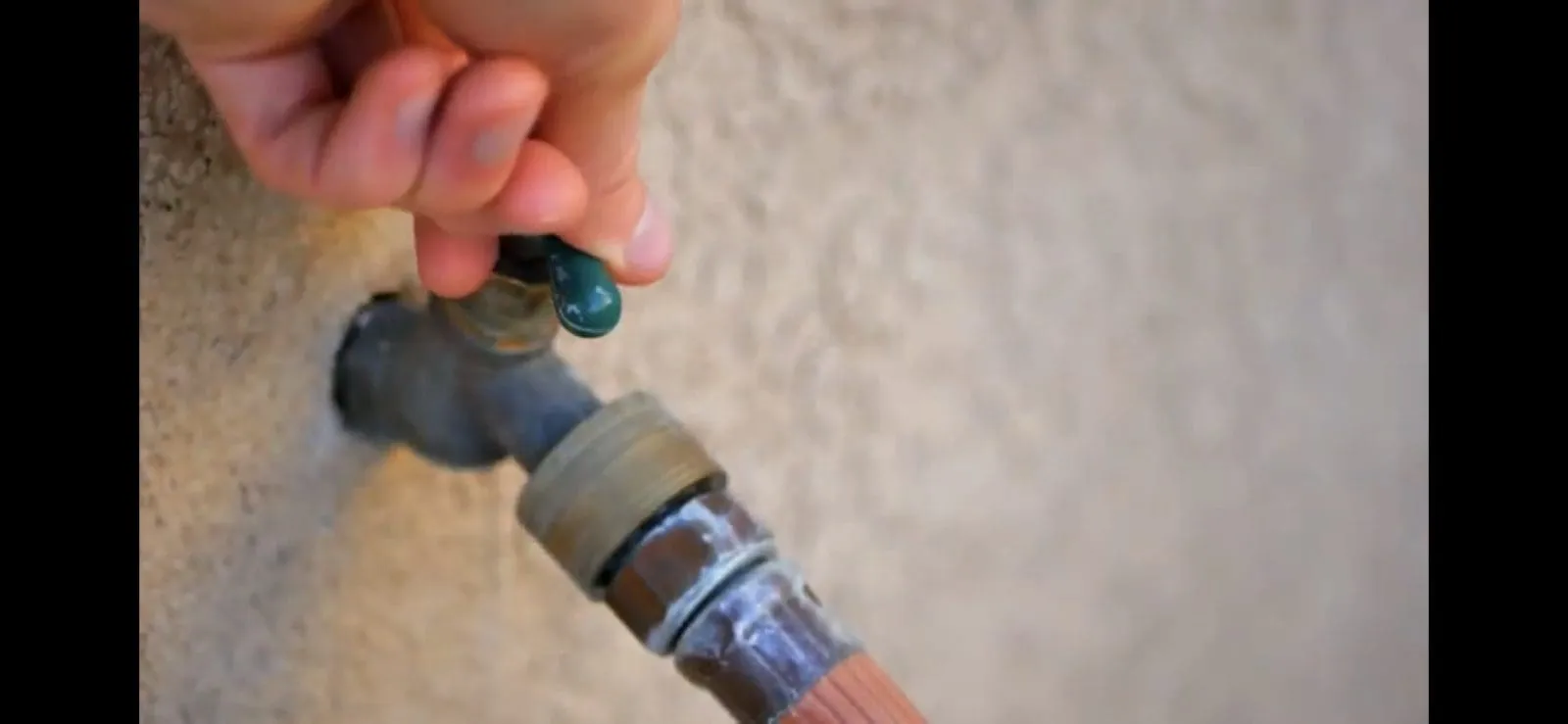
This prevents automatic refilling from concealing water loss and reduces the effect of splashing and running water features during the comparison.
Fill a 5-gallon bucket up to the top of the bucket (about an inch from the top) and set it on your first or second step in your pool.
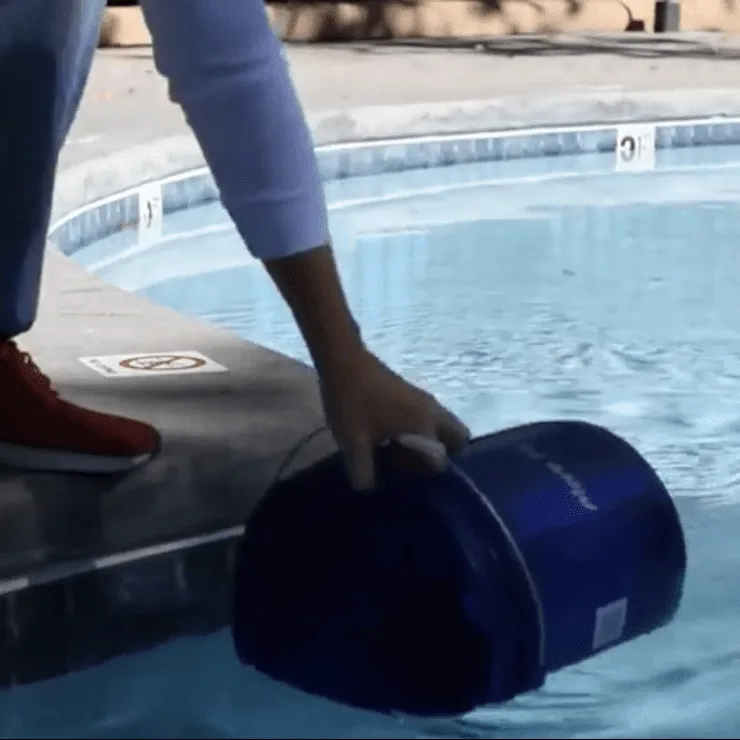
We like filling the bucket to the top for two reasons. First, it weighs the bucket down enough that it shouldn’t float away or fall over, and second, it mimics the pool conditions most closely.
Next, mark with a piece of tape or permanent marker where the water level is on the inside of the bucket.
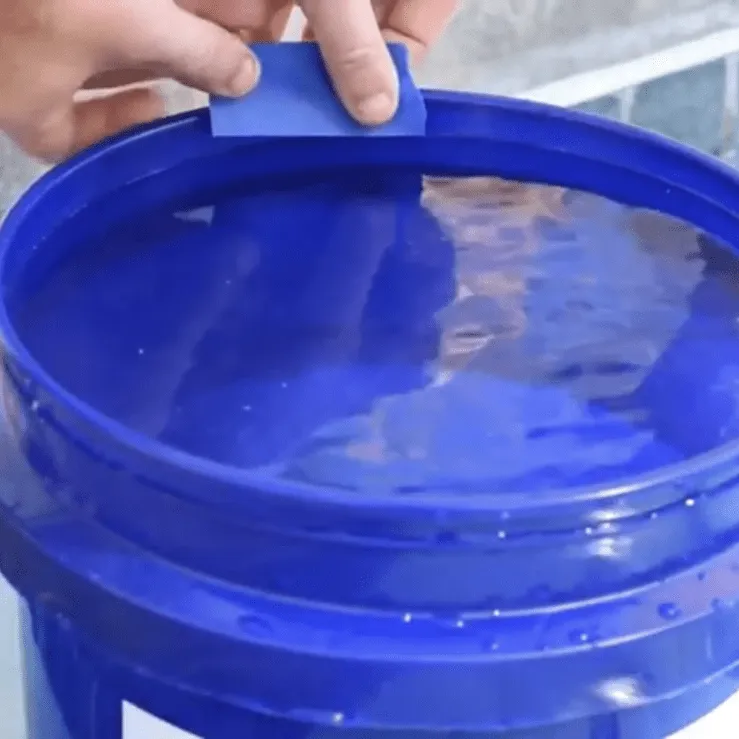
Either will work fine. Just make sure that whatever you use will still be there on the bucket 24 hours later.
Use tape or a removable marker to mark the pool water level on the outside of the bucket.
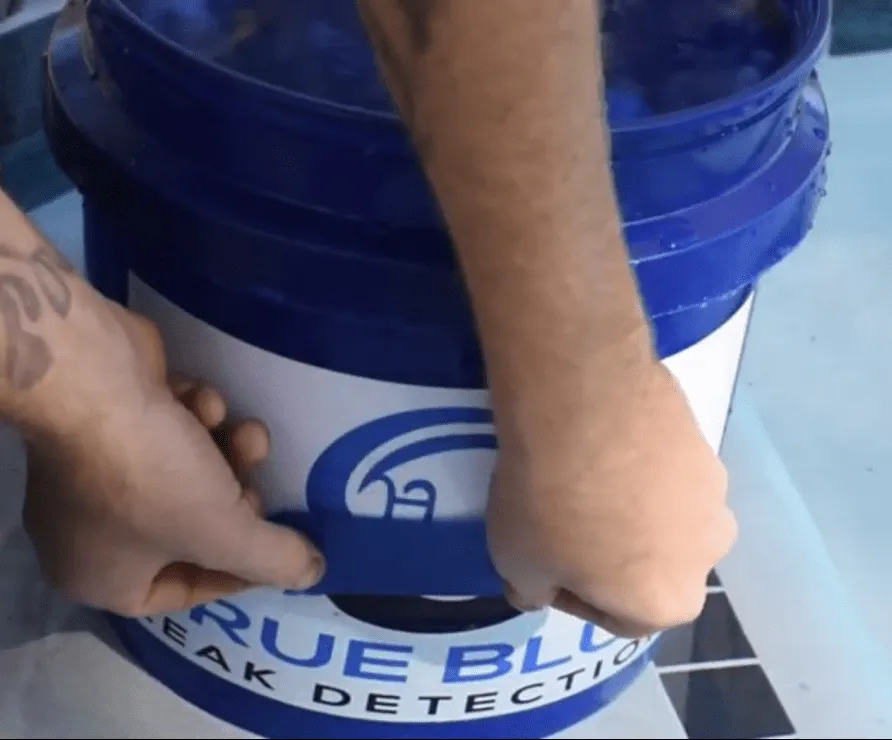
With a piece of tape or marker, mark where the pool water level is on the outside of the bucket so that you can measure how much water your pool is losing.
Wait 24 hours.

Compare the levels after 24 hours, provided rain, refilling, or pool use has not disrupted the test.
Then, return to the bucket with a ruler. Measure on the inside of the bucket how far the water level has dropped from your original mark. Do the same thing on the outside of the bucket.
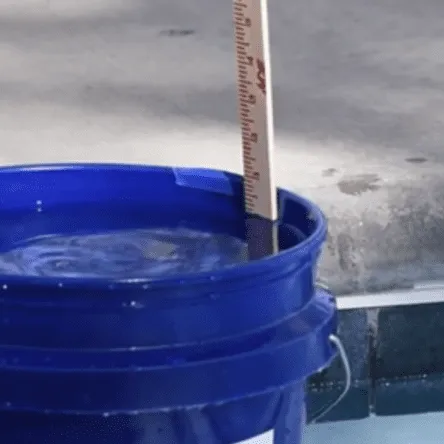
If the water drops by the same amount inside and outside the bucket, evaporation may explain the loss during that test.
If the pool level drops more than the level inside the bucket, investigate a possible leak and share the measurements with a leak detection specialist.
If you need a more detailed explanation, go to our Pool Bucket Test page by Clicking Here.
How Can I Tell Where My Pool Is Leaking?
Once you’ve done the pool bucket test and you find your pool has a leak…
If you are not ready to call a leak detection company, you can still find out how to find your pool leak by trying to pinpoint the source of your leak.
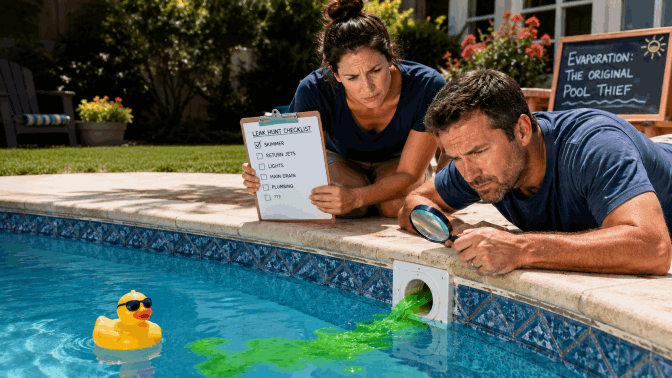
A great way to know how to find a pool leak is by doing a Pool Leak Detection Dye Test.
You can buy a pool dye kit on Amazon or from many pool suppliers.
How to Perform a Pool Dye Test
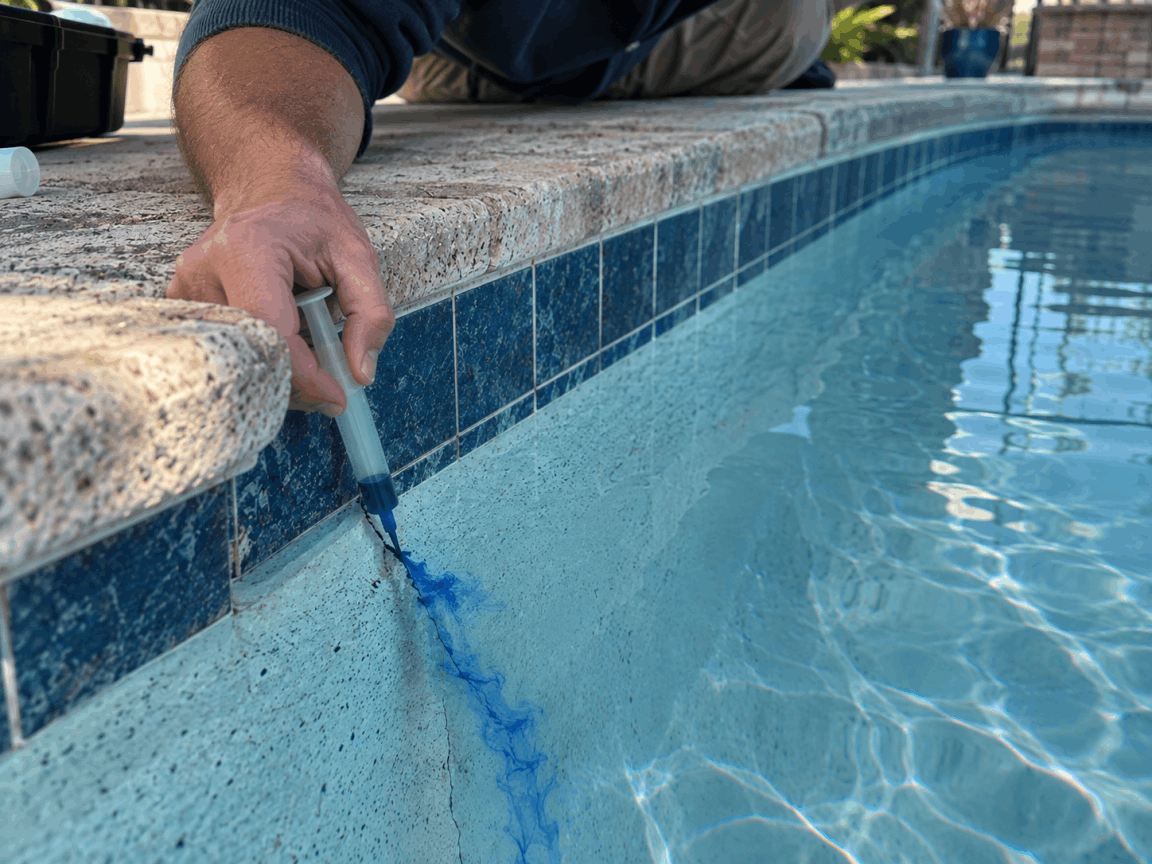
- Turn off your pool equipment and fill your syringe with the pool dye. The syringe should have come with your dye kit.
- Start with suspicious areas, such as visible cracks.
- Slowly release a small amount of dye beside a suspected crack. Dye drawn into an opening can help identify a leak; avoid creating currents that obscure its movement.
- Repeat the check around safely accessible skimmers, return fittings, and suspected openings. Dye movement near a fitting is a clue, not proof of an underground pipe break. Leave deep-water inspection and pressure testing to a qualified professional.
- If you have a leaking crack, you may buy some underwater AB epoxy and fill the crack yourself. Here is a good option for Pool crack two part epoxy. If the dye test doesn’t show anything, it may be time to call in the pros.
- If you have epoxied a leaking crack, perform the bucket test again to ensure the leaking has stopped.