Pool Leak Diagnosis
5 Possible Causes of Pool Leaks When the Pump Is Off
Five possible sources of pool water loss that can continue while the circulation pump is off, plus symptoms and troubleshooting steps.
Why does a pool leak when the pump is off?
Water loss with the pump off can point to a leaking skimmer, underground plumbing, damage in the pool shell, a main-drain problem, or a faulty hydrostatic relief valve. First confirm the loss with a bucket test, then use water-level behavior, dye testing, and line isolation to narrow the source.
A pool is a great source of relaxation and enjoyment, but it requires regular maintenance to keep it in good condition. One troubling issue that pool owners often face is leaks. If you’ve called us before, you know that we ask you a series of questions. One of those questions is whether your pool leaks when the pump is off.
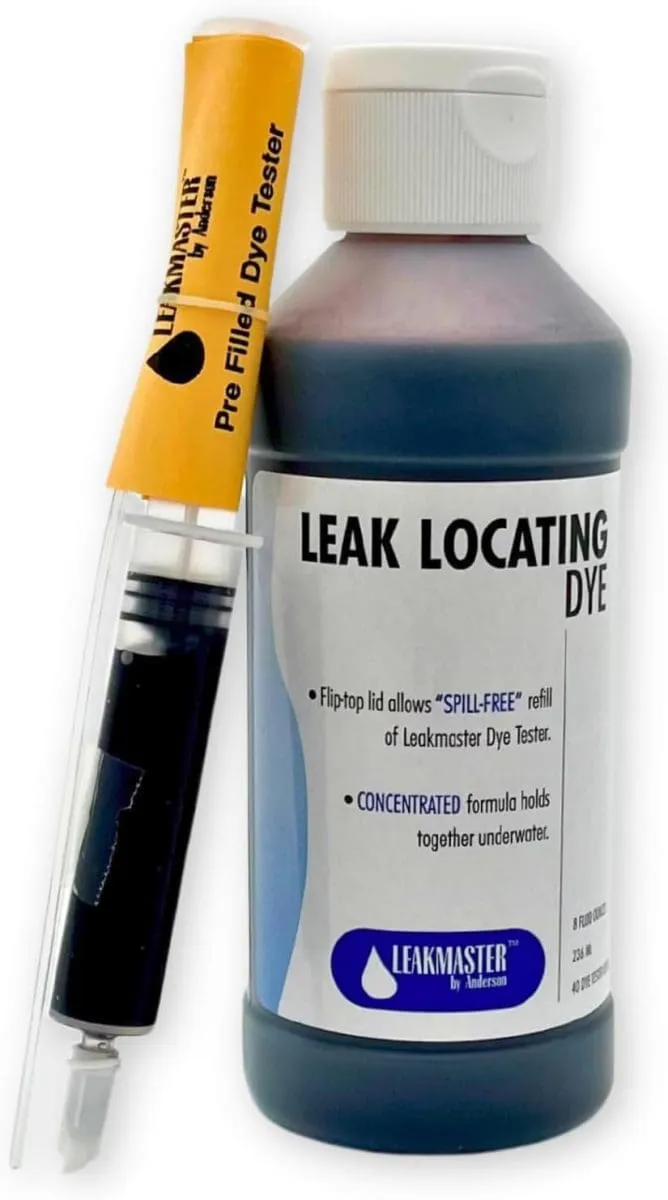
Understanding why your pool leaks when the pump is off is crucial for addressing the problem promptly and effectively. Here are five possible causes and steps you can take to narrow down the issue. Many structural leaks can be investigated with a simple pool dye test. If you need a pool dye syringe, the image below links to the type of dye we use.
Does Your Pool Leak When the Pump Is Off?
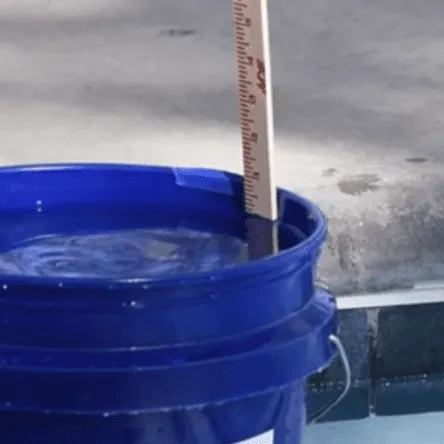
First things first: confirm that your pool is leaking by performing a pool bucket test. If you confirm a leak, here are five possible reasons your pool loses water when the pump is off.
1. Leaking Skimmer
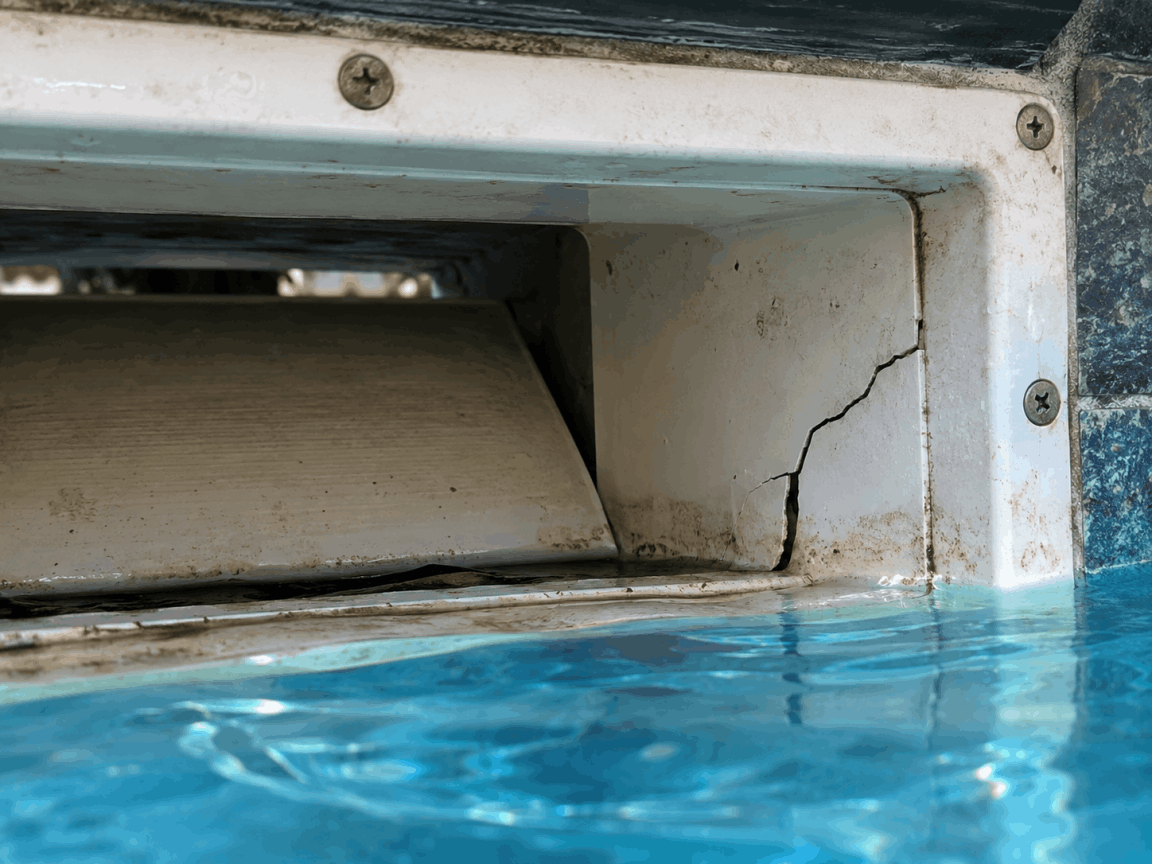
The skimmer is a critical component of your pool’s circulation system, designed to remove debris from the water’s surface. However, it can develop leaks, especially when the pump is off and the water level is higher in the skimmer.
Leaking Skimmer Causes:
- Cracks in the Skimmer: Over time, the skimmer can develop cracks due to temperature changes, ground movement, or wear and tear.
- Loose Skimmer Gasket: The gasket that seals the skimmer to the pool wall can deteriorate or become loose, leading to leaks.
Leaking Skimmer Symptoms:
- The water level drops when the pump is off.
- Wet spots around the skimmer area.
- The deck is sinking around the skimmer area.
Leaking Skimmer Solutions:
- Dye test the area: Squirt small amounts of dye into the cracks and all around the skimmer to see if a leak is pulling in the dye.
- Inspect for Cracks: Check the skimmer for any visible cracks and repair them with pool-safe epoxy.
- Replace the Gasket: If the gasket is worn or loose, replace it to ensure a proper seal.
- Seal the crack: Some cracks in the skimmer throat or bucket can be sealed with pool-safe epoxy.
- Replace the skimmer: You may need a pool company to break out the old skimmer and put a new one in.
- Inject the skimmer: Some skimmers can be injected with an expandable foam that can fill in all of the gaps and cracks from below and around the skimmer.
2. Pool Plumbing Leaks
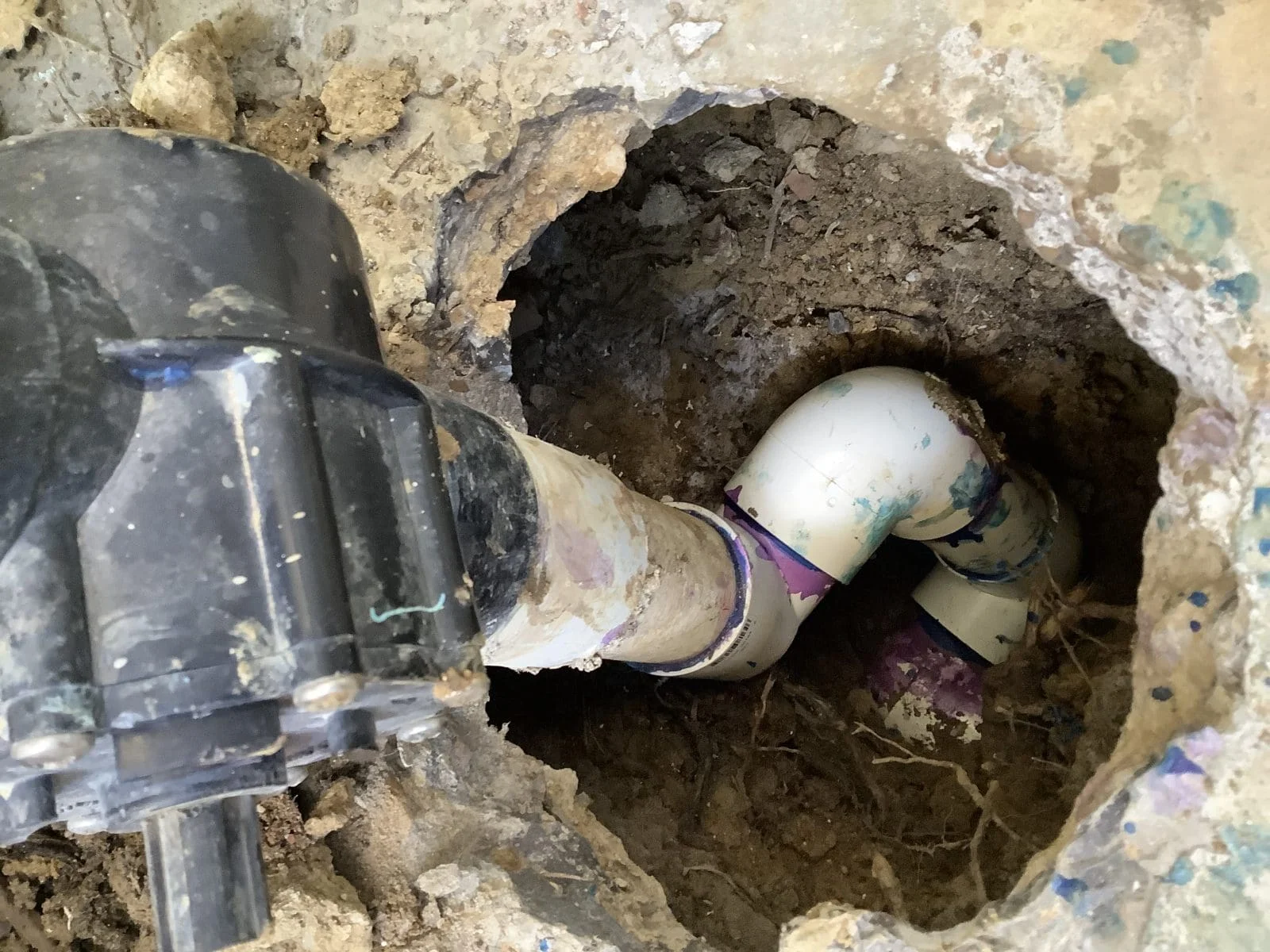
Many of our customers call in thinking that since their pool is leaking when the pool is off then the leak isn’t in the pipes. Leaks in the pool’s plumbing system are common, even when the pump is off.
Pool Plumbing Leak Causes:
- Loose or Damaged Fittings: Fittings can loosen over time due to vibrations from the pump or physical damage.
- Cracked Pipes: Pipes can crack due to freeze-thaw cycles, ground movement, or improper installation.
- Pipes crack for many reasons. Sometimes, pool companies even fail to glue sections of PVC correctly. Don’t be surprised if an unusual installation problem caused the break.
Pool Plumbing Leak Symptoms:
- The water level decreases when the pump is off or on.
- Puddles of water near the pump or plumbing lines.
- Puddles of water can also pop up far away from the break.
Pool Plumbing Leak Solutions:
- Inspect Fittings: Check all visible fittings and tighten any that are loose. Replace any damaged fittings.
- Using dye here will really help. Many times a fitting can look broken but if it isn’t pulling dye through the break it’s probably not leaking water.
- Check for Cracked Pipes: Inspect the plumbing lines for cracks and replace any damaged sections. A professional may need to pressure test the system to locate hidden leaks.
- If you don’t want a professional to pressure test the system, try turning off your pump for at least 24 hours and plugging the return jets with the proper winterizing plugs. Make sure the valve controlling the return lines is turned off at the equipment.
- If you stop losing water with the return lines plugged, you have likely narrowed the leak to that part of the system. Similar isolation testing can be used for skimmers and main drains.
3. Leaking Pool Shell
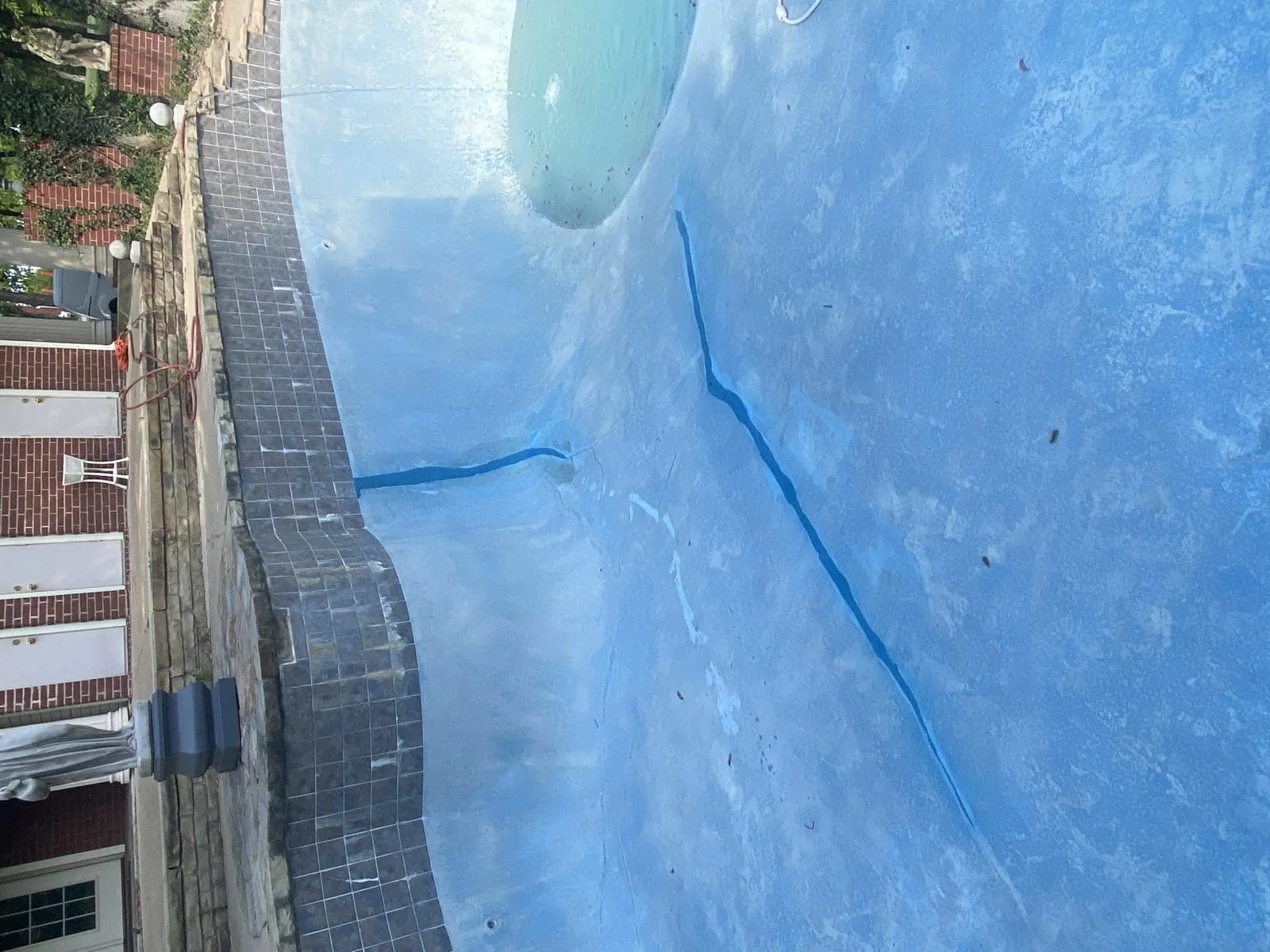
The pool shell itself can develop leaks, particularly when it has cracks or structural damage. This type of leak can continue regardless of whether the circulation pump is running.
Leaking Pool Shell Causes:
- Cracks in the Concrete: Concrete pools can crack due to settling, temperature changes, or impact damage.
- Vinyl Liner Tears: Vinyl liners can tear due to age, improper installation, or sharp objects.
Leaking Pool Shell Symptoms:
- Visible cracks or tears in the pool shell or liner.
- Water loss is more pronounced when the pump is off.
Leaking Pool Shell Solutions:
- Repair Cracks: Use pool-safe epoxy or a concrete patch to repair cracks in the pool shell.
- Patch Vinyl Liners: Repair small tears in vinyl liners with a vinyl patch kit. For extensive damage, the liner may need to be replaced.
4. Faulty Main Drain
The main-drain assembly at the bottom of the pool is another potential leak source. A damaged fitting, sump, hydrostatic valve, or connected plumbing line can continue losing water when the pump is off.
Faulty Main Drain Causes:
- Damaged Drain Fitting or Sump: Cracks or failed seals around the drain assembly can allow water to escape.
- Cracked Drain Line: The line connecting the main drain to the pump can crack, leading to leaks.
Faulty Main Drain Symptoms:
- Water loss when the pump is off.
- The water level continues falling after it drops below the skimmer and return fittings.
Faulty Main Drain Solutions:
- Professional isolation: Ask a qualified technician to isolate and test the suspected circuit. Do not plug suction fittings or remove drain covers yourself.
- Professional isolation: Ask a qualified technician to isolate and test the suspected circuit. Do not plug suction fittings or remove drain covers yourself.
5. Hydrostatic Relief Valve Issues
The hydrostatic relief valve is designed to protect the pool structure by relieving pressure from groundwater. If the valve sticks open or fails to seal, the pool can lose water even when the pump is off.
Hydrostatic Relief Valve Issues Causes:
- Stuck or Damaged Valve: The valve can get stuck open or become damaged, allowing water to escape.
- Improper Installation: Incorrect installation can lead to valve failure and leaks.
Hydrostatic Relief Valve Issues Symptoms:
- Water loss when the pump is off.
- Wet spots around the pool.
- You may see few visible signs even while the pool continues losing a significant amount of water. Do not allow the pool to drain completely; low water can damage the pool and increase the risk of structural movement.
- If you have already observed continued loss below a light or return, report that observation. Do not intentionally allow the pool to drain to the bottom to investigate.
Hydrostatic Relief Valve Issues Solutions:
- Professional valve inspection: Have a qualified pool professional inspect a suspected hydrostatic relief valve. Do not remove drain covers or enter the deep end to work on the valve yourself.
- Professional Inspection: If the valve is improperly installed or severely damaged, consult a professional to ensure it is correctly repaired or replaced.
- https://www.troublefreepool.com/threads/hydrostatic-relief-valve-diagnosis-replacement.122669/
Preventive Measures and Maintenance Tips
To minimize the risk of leaks and extend the life of your pool, regular maintenance is essential. Here are some preventive measures:
- Regular Inspections: Conduct routine inspections of your pool and equipment to catch potential issues early.
- Maintain Proper Water Chemistry: Balanced water chemistry prevents damage to the pool surface and plumbing.
- Winterization: If you live in a region with cold winters, ensure your pool is properly winterized to prevent freeze damage.
- Professional Maintenance: Schedule regular maintenance with a professional pool technician to ensure all components are in good working order.
When to Call a Professional
While some pool leaks can be addressed with DIY methods, many others require professional assistance. If you cannot locate the source of the leak, if the leak is severe, or if you are uncomfortable performing the repairs, it’s best to call a professional. A pool specialist has the expertise and tools to diagnose and fix leaks efficiently, ensuring your pool stays in top condition.
Conclusion
Understanding why your pool leaks when the pump is off and taking the appropriate steps to fix it can save you from costly repairs and water loss. By identifying common causes such as leaking skimmers, plumbing leaks, cracked pool shells, faulty main drains, and hydrostatic relief valve issues, you can address leaks promptly and maintain your pool’s functionality. Regular maintenance and professional assistance will help keep your pool in excellent condition, providing years of enjoyment and relaxation. If in doubt, don’t hesitate to seek professional help to ensure your pool remains a refreshing oasis.
Pool Leaks With the Pump Off FAQ
Can pool plumbing still leak when the pump is off?
Yes. A damaged underground line can lose water with the pump running or stopped. The pump changes pressure and flow, but it does not necessarily stop gravity-driven water loss.
What should I test first if the pool loses water while off?
Start with a bucket test to confirm the pool is losing more water than evaporation. Once confirmed, compare water loss under controlled conditions and inspect the skimmer, fittings, shell, drain, and equipment.
What does it mean if plugging the returns stops the leak?
That result suggests the return-side plumbing may contain the leak, although isolation testing and pressure testing are usually needed to confirm the exact line and location.
When should a pool leak professional be called?
Call a professional when the source remains hidden, the loss is severe, underground plumbing may be involved, or a main drain or hydrostatic valve must be inspected safely.